
Orbit 2 Outlet Hose Faucet Timer Manual: A Comprehensive Guide
This guide details the Orbit 2 Outlet timer, offering flexible watering programs with easy installation steps, covering location selection and hose connections.
Orbit Irrigation Products has long been a trusted name in yard and garden watering solutions. Hose faucet timers, like the 2-Outlet model, represent a convenient and cost-effective way to automate your lawn and garden hydration. These timers eliminate the guesswork and potential waste associated with manual watering, ensuring your plants receive the optimal amount of water, even when you’re away.
Whether you’re managing a small flowerbed or a more extensive garden, an Orbit timer offers programmable schedules tailored to your specific needs. They are particularly beneficial for homeowners who rely on garden hoses or drip systems, providing a smart alternative to full irrigation systems. The ease of installation and user-friendly interface make them accessible to gardeners of all skill levels.
Understanding the Benefits of Using a Timer
Utilizing a hose faucet timer, such as the Orbit 2-Outlet model, delivers significant advantages for both your garden and your wallet. Automated watering conserves water by delivering precise amounts, reducing runoff and waste – crucial in drought-prone areas. Consistent watering schedules promote healthier plant growth, leading to a more vibrant and productive garden.
Beyond conservation and plant health, timers offer unparalleled convenience. Forget the hassle of remembering to water or adjusting schedules based on weather. Orbit timers allow you to customize watering durations and frequencies, freeing up your time and ensuring your garden thrives, even during vacations or busy periods. This simplifies garden care and maximizes efficiency.
Orbit 2 Outlet Timer: Key Features
The Orbit 2 Outlet Timer stands out with its ability to control two independent watering zones simultaneously. This is ideal for gardens with diverse watering needs – lawns, flowerbeds, and vegetable patches can each receive customized hydration. It boasts a simple, user-friendly interface for easy programming of watering schedules, durations, and frequencies.
Key features include a manual watering override for instant hydration and a rain delay function to prevent overwatering during inclement weather. The timer accommodates various watering styles, from sprinklers to drip irrigation. Its durable construction ensures long-lasting performance, while the straightforward design simplifies setup and operation for all users.
Timer Components and Identification
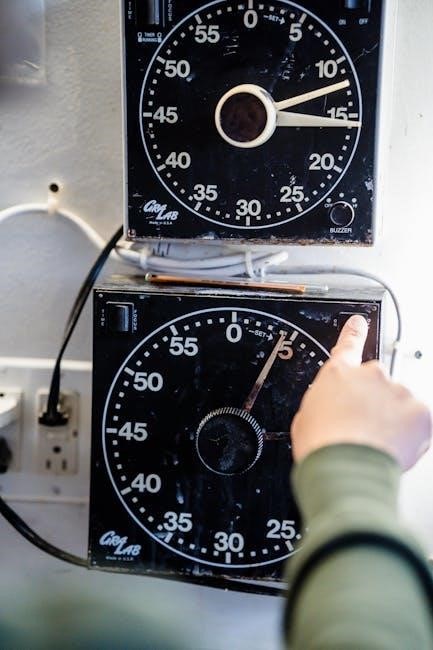
The Orbit 2 Outlet Timer consists of several key components. The main unit houses the digital display, programming buttons (Set Clock, Start), and the two outlet valves. These valves independently control water flow to each connected hose or irrigation system. A battery compartment, typically requiring two AA batteries, powers the timer’s electronic functions.
You’ll also find a connection point for attaching the timer to your hose faucet, and threaded outlets for connecting hoses. The dial, labeled with “2 Outlet,” is crucial for selecting which zone to program. Familiarizing yourself with these parts ensures proper installation and operation. Refer to the included diagrams for visual identification of each component.
Installation and Setup
Proper setup involves selecting a suitable location, securely mounting the timer, connecting it to the faucet, and attaching hoses and valves correctly.
Selecting the Optimal Location
Choosing the right spot for your Orbit 2 Outlet Timer is crucial for reliable operation and longevity. Ideally, select a location that’s sheltered from direct sunlight and extreme weather conditions, as prolonged exposure can damage the timer’s components.
Ensure the location is easily accessible for programming and battery changes, but also secure enough to prevent accidental tampering or displacement. The timer should be positioned close enough to a standard hose faucet for easy connection, yet far enough to avoid water splashing directly onto the unit.
Avoid areas prone to freezing temperatures during winter months, as this can cause damage to the internal mechanisms. A shaded, well-ventilated spot is generally best, offering both protection and convenience.
Mounting the Timer Securely
Secure mounting prevents damage and ensures accurate operation of your Orbit 2 Outlet Timer. Most models include a mounting bracket with screw holes designed for attachment to a wall or post. Use appropriate screws (not always included) suitable for the mounting surface – wood, vinyl siding, or masonry.
Ensure the bracket is firmly attached, supporting the timer’s weight and resisting vibrations. Avoid over-tightening screws, which could crack the timer’s casing. Position the timer so the display is easily visible and accessible for programming.

If a wall isn’t available, consider a sturdy post or fence. Proper mounting minimizes stress on the hose connections and protects the timer from accidental bumps or falls.
Connecting to the Hose Faucet
Connecting the Orbit 2 Outlet Timer to your hose faucet is a crucial first step. Ensure the faucet is fully turned off before attaching the timer. Hand-tighten the timer securely to the faucet, avoiding the use of pliers or wrenches which can cause damage to the threads.
Check for a rubber washer inside the timer’s inlet – this provides a watertight seal. If a leak occurs, slightly tighten the connection or inspect the washer for damage. A Teflon tape application to the faucet threads can further enhance the seal, but use sparingly.
Once connected, slowly turn on the faucet to check for leaks before proceeding to attach hoses and valves.
Attaching the Hose and Valves
After connecting to the faucet, attach your garden hose or watering valves to the timer’s two outlets. Ensure a snug, hand-tightened fit for each connection to prevent leaks. Each outlet operates independently, allowing for customized watering zones.
If using multiple valves, identify which zone corresponds to each outlet during programming. For hoses, ensure they are fully extended and free of kinks to maintain consistent water pressure. Regularly inspect hose connections for wear and tear.
Remember to remove the timer from the hose faucet during freezing temperatures to prevent damage.

Programming the Timer
Setting the current time and date is the first step, followed by programming watering schedules for each of the two independent outlets.
Setting the Current Time and Date
To accurately program your watering schedules, establishing the correct time and date is crucial. Begin by locating the “Set Clock” button on your Orbit 2 Outlet Timer. Press and hold this button until the display begins to flash, indicating it’s in time-setting mode.
Use the program buttons – often labeled “Hour” and “Minute” – to adjust the current time. Confirm each selection by pressing the “Set” button. Repeat this process to set the month and day.
Ensure you’ve selected the correct AM or PM designation. Once the date and time are accurately displayed, press “Set” one final time to save your settings. A properly set clock ensures your watering programs activate at the desired times.
Programming Watering Schedules ⸺ Single Outlet
For single outlet programming, first, ensure the timer is in program mode. Press the “Program” button to access the scheduling options. Select Outlet 1, as you’re focusing on a single watering zone. Use the “Start Time” buttons to define when the watering cycle should begin.
Next, set the “Watering Duration” using the corresponding buttons, specifying how long the water will flow. Then, choose the “Frequency” – how often the watering cycle repeats (e.g., daily, every other day).
Confirm each setting with the “Set” button. Repeat these steps to create multiple start times for varied watering needs. Remember to save your program!
Programming Watering Schedules ‒ Dual Outlet
To program both outlets, begin by entering program mode and selecting Outlet 1. Set the “Start Time,” “Watering Duration,” and “Frequency” as described for single-outlet programming, confirming each with the “Set” button. Once Outlet 1 is programmed, switch to Outlet 2 using the outlet selection button.
Repeat the process for Outlet 2, establishing independent watering schedules. This allows for customized watering based on plant type or location. You can have different start times, durations, and frequencies for each outlet.
Ensure both programs are saved. The timer will now operate both outlets according to your defined schedules.
Understanding Watering Duration and Frequency
Watering Duration dictates how long each watering cycle lasts, measured in minutes. Adjust this based on plant needs and soil type; shorter durations for sandy soil, longer for clay. Frequency determines how often the timer initiates a watering cycle – daily, multiple times a week, or specific intervals.
Consider seasonal changes. Reduce duration and frequency during cooler months. Observe your plants for signs of over or under-watering. Wilting leaves suggest insufficient water, while yellowing leaves may indicate overwatering.
Experiment to find the optimal balance for your garden, conserving water while promoting healthy plant growth.

Advanced Features and Settings
Explore rain delay options, manual override for immediate watering, and seasonal adjustments to optimize water usage based on changing weather conditions.
Rain Delay Functionality
The Orbit 2 Outlet Timer incorporates a convenient rain delay feature, allowing you to temporarily halt scheduled watering during periods of precipitation. This prevents overwatering and conserves valuable water resources. Typically, activating the rain delay involves pressing a dedicated button or navigating through the timer’s menu.
You’ll then specify the duration of the delay, often ranging from hours to several days. The timer will automatically resume its programmed schedule once the delay period expires. This feature is particularly useful for responding to unexpected rainfall, ensuring your garden receives only the necessary amount of hydration. Refer to your specific model’s manual for precise instructions on utilizing the rain delay function.
Manual Watering Override
The Orbit 2 Outlet Timer provides a manual watering override function, granting you immediate control over your watering system, independent of the programmed schedule. This is invaluable for addressing localized dry spots or providing supplemental hydration to specific plants. Activating the override usually involves pressing and holding a designated button, often labeled “Manual.”
The timer will then initiate watering for a pre-set duration, or allow you to specify a custom watering time. To deactivate the manual override and return to the scheduled program, simply press the same button again or allow the set duration to elapse. This feature offers flexibility and ensures your plants receive water precisely when they need it, regardless of the timer’s settings.
Seasonal Adjustment Options
Orbit 2 Outlet Timers often include seasonal adjustment features to optimize watering based on changing weather conditions. As seasons shift, plant water needs vary; this function allows you to increase or decrease watering duration without completely reprogramming schedules. Typically, a percentage adjustment is used – for example, increasing watering by 25% during hotter summer months or decreasing it by 50% during cooler, wetter periods.
This prevents over or under-watering, conserving water and promoting healthy plant growth. The adjustment is usually applied globally to all programmed schedules. Consult your specific model’s manual for detailed instructions on accessing and utilizing these seasonal adjustment options for efficient water management.
Troubleshooting Common Issues
Common problems include the timer failing to turn on, water leaks at connections, incorrect watering times, and display errors – solutions are readily available.
Timer Not Turning On
If your Orbit timer isn’t powering on, begin by verifying the battery installation. Ensure they are fresh and correctly positioned within the compartment. A common issue is low battery power, especially after prolonged use or during colder temperatures.
Next, check the faucet is fully open, allowing water flow to the timer. Insufficient water pressure can sometimes prevent activation. Also, confirm the manual watering override isn’t engaged, as this can bypass the programmed schedule.

Inspect the timer’s internal components for any visible damage. If the problem persists, consult the Orbit Irrigation Products website for specific troubleshooting steps related to your model (62061Z or 58910) or contact customer support for assistance.
Water Leaks Around Connections
Leaks at the hose faucet, hose, or valve connections are common and usually easily resolved. First, ensure all connections are tightly secured, but avoid over-tightening, which can damage threads. Inspect the rubber washers inside the connections; these may be worn or misaligned and require replacement.
Applying Teflon tape to the threads of the faucet and timer connections can create a tighter seal. If leaks persist at the hose connection, check the hose itself for cracks or damage. Ensure the hose is securely clamped to both the timer and the watering device.
For stubborn leaks, consider disconnecting and reassembling the connections, carefully checking washer placement.
Incorrect Watering Times
If your Orbit timer isn’t watering at the programmed times, verify the current time and date are correctly set. Double-check the start time and duration settings for each watering schedule, ensuring they align with your desired watering plan. Confirm that the timer isn’t in manual mode, overriding the programmed schedules.

Review the watering frequency settings – are you expecting daily watering, or is it set to specific days of the week? A low battery can sometimes cause timing inaccuracies, so consider replacing the batteries.
Finally, ensure there are no rain delay settings activated that might be preventing watering.
Display Issues and Error Codes
A blank or dimly lit display usually indicates low batteries; replace them immediately. If the display shows garbled characters, try resetting the timer by removing and reinserting the batteries. Some Orbit models may display specific error codes – consult the full digital manual (models 62061Z & 58910) for a code interpretation guide.
If the screen is frozen, a full reset might be necessary. Ensure the timer isn’t exposed to extreme temperatures or direct sunlight, as this can affect the LCD. If issues persist after these steps, contacting Orbit customer support is recommended for further assistance and potential troubleshooting.

Maintenance and Care
Proper care involves winterizing to prevent damage, regular cleaning, and timely battery replacement to ensure optimal performance and longevity of your timer.
Winterizing the Timer
As colder weather approaches, protecting your Orbit 2 Outlet timer from freezing temperatures is crucial to prevent damage and ensure its functionality next season. Begin by disconnecting the timer from the hose faucet and any attached hoses. Thoroughly drain all water remaining inside the timer unit and the connected valves.
Remove the batteries to prevent corrosion from potential leaks. Store the timer indoors in a dry, frost-free location, such as a garage or basement. Avoid storing it in areas exposed to extreme temperatures or humidity. Inspect the timer for any cracks or damage before storing it. Proper winterization will significantly extend the lifespan of your Orbit timer, saving you replacement costs in the spring.
Cleaning and Storage
Regular cleaning maintains your Orbit 2 Outlet timer’s performance. Before long-term storage, wipe down the exterior with a damp cloth to remove dirt and debris. Avoid using harsh chemicals or abrasive cleaners, as these can damage the plastic casing. Inspect the hose connections for mineral buildup; a mild vinegar solution can help dissolve this.
Ensure the timer is completely dry before storing it. Store in a cool, dry place, away from direct sunlight and extreme temperatures. A storage container can protect it from dust and accidental damage. Proper cleaning and storage will help preserve the timer’s functionality and extend its operational life, ensuring reliable watering for seasons to come.
Replacing Batteries
Low battery power can cause inaccurate timing or timer malfunction. The Orbit 2 Outlet timer typically requires AA alkaline batteries. To replace them, locate the battery compartment, usually on the side or back of the unit. Gently open the compartment and remove the old batteries, noting the correct polarity (+ and -).
Insert fresh batteries, ensuring proper alignment with the polarity markings. Close the battery compartment securely. After replacing the batteries, it’s crucial to reset the time and date, and re-program your watering schedules. Regularly check battery levels, especially during peak watering season, to avoid interruptions in your automated watering system.

Resources and Support
Orbit Irrigation provides extensive support, including a website with digital manuals (62061Z & 58910), FAQs, and direct customer service contact options.
Orbit Irrigation Products Website
Orbit Irrigation’s official website serves as a central hub for all product-related information, including comprehensive support for the 2 Outlet Hose Faucet Timer. Visitors can easily navigate to the ‘Support’ or ‘Manuals’ section to find downloadable PDF versions of the user manual for models like 62061Z and 58910.
The website also features helpful resources such as troubleshooting guides, frequently asked questions (FAQs), and instructional videos demonstrating timer setup and programming. Beyond the 2 Outlet timer, the site provides details on their entire range of irrigation solutions, from simple hose timers to sophisticated smart watering systems. Customers can register their products for warranty purposes and access exclusive content.
Downloading Digital Manuals (Model 62061Z & 58910)
Orbit provides readily accessible digital manuals for the 2 Outlet Hose Faucet Timer, specifically models 62061Z and 58910, ensuring users have immediate access to guidance. These manuals are typically available as downloadable PDF files from the official Orbit Irrigation Products website.
The digital format allows for easy viewing on computers, tablets, and smartphones, offering convenient access in the garden or workshop. Manuals detail everything from initial setup and programming of watering schedules to troubleshooting common issues and understanding advanced features. 1 Outlet and 2 Outlet versions have separate manuals; Downloading the manual eliminates the need to physically store a paper copy and ensures you always have the latest version.
Contacting Customer Support
Orbit Irrigation Products offers multiple avenues for customers needing assistance with their 2 Outlet Hose Faucet Timer. The primary method is through their dedicated customer support website, providing access to a comprehensive knowledge base, FAQs, and troubleshooting guides.
Direct contact options typically include a toll-free phone number for speaking with a support representative during business hours. Email support is also generally available, allowing for detailed inquiries and potential file attachments. When contacting support, having the timer’s model number (62061Z or 58910) readily available will expedite the process. Prompt and helpful assistance is a priority for Orbit, ensuring a positive user experience.
Frequently Asked Questions (FAQ)
Q: My timer won’t turn on. A: Ensure batteries are fresh and correctly installed. Check the hose faucet is fully open. Q: Water is leaking. A: Tighten all hose connections securely. Inspect the rubber washers for damage.
Q: How do I reset the timer? A: Remove batteries for 30 seconds, then reinsert. Q: Can I use this with a rain sensor? A: No, this model doesn’t support rain sensor connectivity. Q: What does the manual watering function do? A: It allows immediate watering, overriding the programmed schedule. Refer to the manual for detailed instructions on these and other common issues.