
Romeo and Juliet Study Guide: An Overview

This guide explores Shakespeare’s tragedy, examining themes of love, fate, and conflict within the Montague-Capulet feud․ It delves into character analysis and literary techniques․
Romeo and Juliet, penned by William Shakespeare, remains a cornerstone of English literature, captivating audiences for centuries with its poignant tale of young love and tragic fate․ The play, believed to have been written between 1594 and 1596, immediately resonated with Elizabethan audiences, exploring universal themes of passion, conflict, and societal pressures․
Set in Verona, Italy, the narrative centers on Romeo Montague and Juliet Capulet, whose families are locked in a bitter, longstanding feud․ Despite this animosity, they fall deeply in love, initiating a whirlwind romance doomed by circumstance․ Shakespeare masterfully blends comedy, romance, and tragedy, creating a complex and emotionally charged experience․ The play’s enduring popularity stems from its relatable characters and timeless exploration of human emotions, making it a frequent subject of study and adaptation․
Historical Context of Elizabethan England
Shakespeare’s Romeo and Juliet was conceived during a fascinating period: Elizabethan England (1558-1603), under Queen Elizabeth I’s reign․ This era witnessed significant social and political upheaval, including a rigid social hierarchy and a strong emphasis on family honor – elements mirrored in the play’s central conflict․
Society was deeply patriarchal, with fathers holding considerable authority over their children’s lives, including marriage prospects․ Feuds, though perhaps not as formalized as the Montague-Capulet rivalry, were common amongst noble families, often fueled by land disputes or political ambitions․ The Elizabethan worldview was heavily influenced by astrology and a belief in fate, concepts woven throughout the play․ Furthermore, public entertainment, like theatre, flourished, providing a platform for exploring complex themes and challenging societal norms, making Romeo and Juliet a product of its time․
Shakespearean Language and Verse
Shakespeare’s language in Romeo and Juliet is a rich tapestry of Early Modern English, distinct from our contemporary speech․ He frequently employed iambic pentameter – a rhythmic pattern of ten syllables per line – creating a poetic flow and emphasizing key phrases․ This verse form lends a heightened emotional intensity to the dialogue․
Beyond iambic pentameter, Shakespeare utilized prose for lower-class characters, contrasting with the poetry of the nobility․ He also masterfully incorporated rhetorical devices like metaphors, similes, and puns, enriching the text’s meaning and adding layers of complexity․ Understanding these linguistic nuances is crucial for interpreting the play’s subtleties․ Archaic words and grammatical structures require careful attention, but unlock a deeper appreciation for Shakespeare’s artistry and the play’s enduring power․

Character Analysis
This section provides in-depth explorations of Romeo, Juliet, Mercutio, Tybalt, and Friar Laurence, examining their motivations, relationships, and contributions to the tragic narrative․
Romeo Montague: Personality and Development
Initially presented as a Petrarchan lover, consumed by unrequited affection for Rosaline, Romeo embodies youthful impulsiveness and romantic idealism․ His character undergoes a significant transformation upon meeting Juliet, shifting from melancholic longing to passionate, devoted love․
Romeo’s development is marked by a rapid escalation of emotions, leading to rash decisions – notably, his secret marriage to Juliet and his vengeful killing of Tybalt․ He is prone to dramatic pronouncements and acts on instinct rather than reason․
Throughout the play, Romeo demonstrates both courage and a fatalistic acceptance of fate․ His unwavering love for Juliet ultimately drives his tragic end, highlighting his passionate nature and inability to live without her․ He evolves from a lovesick adolescent to a man willing to sacrifice everything for love․
Juliet Capulet: Personality and Development
Initially portrayed as an obedient and naive young woman, Juliet undergoes a remarkable transformation throughout the play, evolving into a figure of strength, determination, and agency․ She begins as a dutiful daughter, accepting her parents’ expectations regarding marriage to Paris;

However, her encounter with Romeo sparks a rapid maturation․ Juliet demonstrates remarkable courage and resourcefulness in pursuing her love, defying her family and societal norms․ She displays a level of practicality and resolve often absent in Romeo, actively seeking solutions to their predicament․
Juliet’s development culminates in her willingness to feign death to avoid marrying Paris, showcasing her unwavering commitment to Romeo․ Her tragic fate underscores her bravery and the constraints imposed upon women in Elizabethan society․
Key Supporting Characters: Mercutio, Tybalt, Friar Laurence
Mercutio, Romeo’s witty and cynical friend, provides comic relief but also embodies the play’s volatile atmosphere․ His death at Tybalt’s hand fuels Romeo’s vengeful actions, escalating the conflict․ Tybalt, Juliet’s cousin, is a fiery and aggressive character, representing the hatred driving the family feud; his duel with Romeo is pivotal․
Friar Laurence, a Franciscan friar, acts as a confidant to Romeo and Juliet, attempting to reconcile their families through marriage․ He provides counsel and facilitates their secret union, but his plans ultimately contribute to the tragedy․
These characters aren’t merely plot devices; they illuminate themes of honor, revenge, and the consequences of unchecked passion, profoundly impacting the central romance․
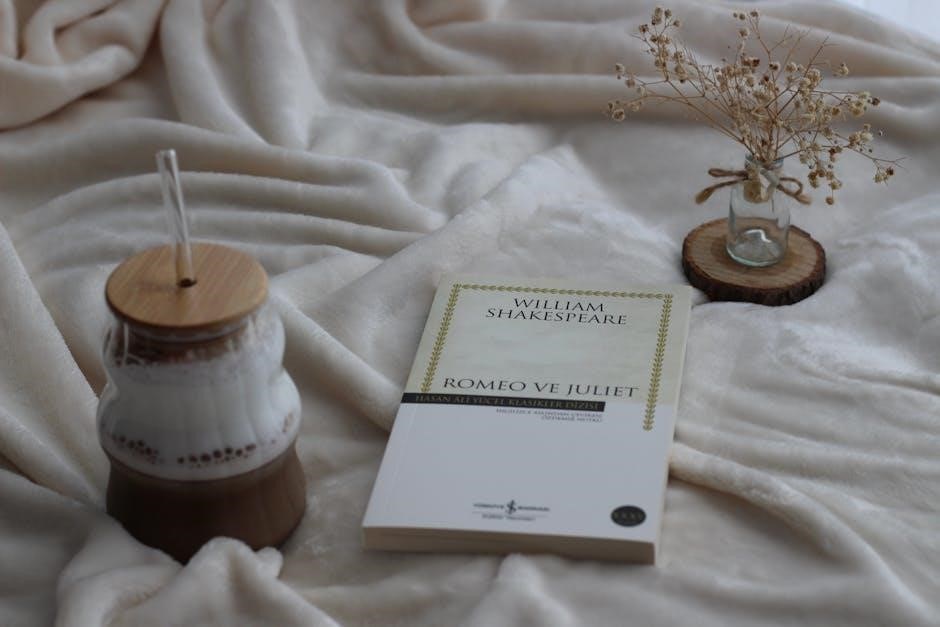
Themes in Romeo and Juliet
Central themes include passionate love, the power of fate, and the destructive nature of prolonged conflict, particularly the ancient grudge between families․
The Theme of Love: Romantic, Familial, and Platonic
Love permeates Romeo and Juliet, manifesting in diverse forms․ Romantic love, intensely portrayed between the titular characters, drives the narrative, yet is tragically intertwined with hate․ Familial love, or its absence, fuels the central conflict; the Capulets and Montagues demonstrate a chilling lack of nurturing affection․
Furthermore, the play showcases platonic love through the bond between Romeo and Mercutio, and Juliet and the Nurse․ These relationships offer solace and loyalty, contrasting sharply with the poisonous animosity surrounding them․ Shakespeare explores how love, in all its complexity, can be both a source of profound joy and devastating sorrow, ultimately questioning its power against societal pressures and predetermined fate․
The Role of Fate and Destiny
Fate and destiny are powerfully presented as controlling forces in Romeo and Juliet․ From the prologue’s declaration of “star-cross’d lovers,” a sense of inevitability hangs over the narrative․ Characters frequently allude to premonitions and unlucky stars, suggesting their lives are predetermined․
This raises questions about free will versus external forces․ Are Romeo and Juliet truly masters of their own destinies, or are they merely puppets of fate? The tragic outcome seems to imply the latter, highlighting the helplessness of individuals against a larger, cosmic plan․ Shakespeare uses this theme to explore the human condition and the limitations of control, leaving audiences to ponder the extent to which our lives are shaped by chance․
Conflict: The Feud Between the Montagues and Capulets
The central conflict in Romeo and Juliet is the longstanding, violent feud between the Montague and Capulet families․ Its origins remain largely unexplained, fueling a cycle of hatred and revenge that permeates Veronese society․ This animosity manifests in public brawls, like the opening scene, and deeply impacts the characters’ lives․
Shakespeare portrays this conflict as senseless and destructive, ultimately leading to the tragic deaths of Romeo and Juliet․ The feud prevents the lovers from openly pursuing their relationship, forcing them into secrecy and desperation․ It represents a broader societal issue of irrational hatred and the devastating consequences of unchecked aggression, serving as a cautionary tale about the futility of prolonged conflict․

Literary Devices and Techniques
Shakespeare masterfully employs imagery, symbolism, dramatic irony, and foreshadowing to enhance the play’s emotional impact and build suspense for the audience․
Shakespeare’s Use of Imagery and Symbolism
Shakespeare’s Romeo and Juliet is rich with evocative imagery and potent symbolism, deepening the play’s thematic resonance․ Light and darkness are recurring motifs; light often associated with Romeo and Juliet’s love, representing purity and hope, while darkness symbolizes death, fate, and the secrecy surrounding their relationship․

Floral imagery, particularly roses, frequently appears, symbolizing beauty, love, and the fleeting nature of life․ The contrast between these beautiful images and the violence of the feud underscores the tragedy․ Symbolism extends to characters – for example, Mercutio’s Queen Mab speech utilizes fantastical imagery to explore the capricious nature of dreams and desires․
Furthermore, birds, particularly nightingales and larks, symbolize the lovers’ connection to time and the impending doom that awaits them․ These carefully chosen images and symbols elevate the play beyond a simple love story, transforming it into a profound meditation on life, death, and the power of fate․
Dramatic Irony and Foreshadowing
Shakespeare masterfully employs dramatic irony and foreshadowing in Romeo and Juliet, heightening the tragic impact of the narrative․ Dramatic irony occurs when the audience possesses knowledge that characters do not, creating suspense and a sense of inevitability․ For instance, Juliet’s family believes her to be mourning Tybalt, while the audience knows she grieves for Romeo․
Foreshadowing, the use of hints and clues about events to come, permeates the play․ The prologue explicitly reveals the lovers’ fate, establishing a sense of doom from the outset․ References to “star-crossed lovers” and premonitions throughout the play subtly hint at the tragic outcome․
These techniques aren’t merely plot devices; they actively engage the audience, creating a poignant awareness of the characters’ impending misfortune and amplifying the emotional weight of their choices and actions․
The Significance of Soliloquies and Asides
Soliloquies and asides are crucial dramatic devices in Romeo and Juliet, offering profound insight into characters’ innermost thoughts and motivations․ Soliloquies, extended speeches delivered alone on stage, allow characters to reveal their private feelings directly to the audience, bypassing dialogue with others․ Romeo’s soliloquy upon seeing Juliet exemplifies this, expressing his immediate and overwhelming love․
Asides, brief remarks made to the audience while other characters are present, provide commentary or reveal hidden intentions․ These techniques create intimacy between the character and the audience, fostering a deeper understanding of their internal conflicts․
Through these devices, Shakespeare unveils the complexities of love, fate, and the characters’ struggles, enriching the play’s emotional depth and dramatic tension․

Plot Summary and Analysis
The play unfolds a tragic romance amidst a family feud, culminating in the lovers’ deaths․ Key scenes drive the narrative, exploring themes of love and fate․
Act-by-Act Breakdown of the Story
Act I introduces the feuding families and Romeo’s initial infatuation with Rosaline, before he meets Juliet at the Capulet feast․ Act II witnesses the blossoming romance, culminating in their secret marriage orchestrated by Friar Laurence․
Act III marks a turning point with Tybalt’s death at Romeo’s hand, leading to Romeo’s banishment․ Act IV details Juliet’s desperate plan to avoid marrying Paris, involving a sleeping potion provided by the Friar․
Act V tragically concludes with Romeo unaware of Juliet’s feigned death, leading to his suicide, and Juliet awakening to find him dead, ultimately taking her own life․ The families reconcile over their children’s bodies, ending the long-standing feud․
Key Scenes and Their Importance
The Capulet Feast (Act I, Scene V) is pivotal, marking Romeo and Juliet’s first meeting and igniting their forbidden love․ The Balcony Scene (Act II, Scene II) beautifully portrays their deepening affection and commitment, despite familial opposition․
The Duel Scene (Act III, Scene I) dramatically escalates the conflict, resulting in Mercutio and Tybalt’s deaths and Romeo’s banishment, shifting the play’s tone․ Juliet’s Soliloquy Before Taking the Potion (Act IV, Scene III) reveals her desperation and courage, highlighting her agency․
The Tomb Scene (Act V, Scene III) is the tragic climax, showcasing the devastating consequences of the feud and the lovers’ ultimate sacrifice, leading to reconciliation․

Critical Perspectives
Modern analyses offer feminist readings of Juliet’s agency and explore adaptations’ relevance, revealing evolving interpretations of Shakespeare’s enduring tragedy and its themes․
Feminist Interpretations of Juliet
Traditionally viewed as a passive victim of circumstance, feminist criticism re-examines Juliet’s character within the patriarchal constraints of Elizabethan society․ Scholars argue her defiance, though ultimately tragic, demonstrates agency and a rejection of predetermined societal roles․ Juliet actively pursues her love for Romeo, challenging familial expectations and demonstrating a strong will often overlooked in conventional readings․
Furthermore, feminist perspectives analyze the limited options available to women during that era, highlighting how Juliet’s desperate actions stem from a lack of control over her own destiny․ Her suicide isn’t solely attributed to grief, but also to the impossibility of forging an independent life outside the confines of marriage and family obligations․ This lens reveals the play as a critique of patriarchal structures and their devastating consequences for women․

Modern Adaptations and Their Relevance
Numerous adaptations demonstrate Romeo and Juliet’s enduring appeal and thematic resonance across cultures and time periods․ From Baz Luhrmann’s vibrant 1996 film, setting the story amidst warring gangs, to West Side Story’s exploration of racial tensions, the core narrative of forbidden love and societal conflict remains powerfully relevant․
These reinterpretations often update the feud’s origins to reflect contemporary issues, such as gang violence, political divides, or economic disparities․ They highlight the universality of the play’s themes – the destructive nature of hatred, the impulsiveness of youth, and the tragic consequences of intolerance․ Modern adaptations also allow for explorations of gender roles and power dynamics, offering fresh perspectives on Juliet’s agency and the societal pressures she faces, ensuring the story continues to captivate new audiences․